Call Now:
1300 247 066Australia's #1 Food Trailer Supplier
Click Here For More Information
Scroll Down For Further Information
Call Now:
1300 247 066Australia's #1 Food Trailer Supplier
Scroll Down For Further Information
For further information about our range of products and prices, please enter your details in the form below to get access to instant pricing and the opportunity to have the information package posted out to you


One of the most common questions people ask when starting a mobile food business is:
“What size food trailer do I actually need?”
Choosing the right size trailer is important because it affects:
Your menu options
Your startup costs
Your workflow and efficiency
Where you can trade and operate
Go too small and you may struggle with space.
Go too large and you may spend more than necessary.
In this guide, we’ll walk through the most common food trailer sizes and how to choose the right one for your business.
Your food trailer size determines how comfortably you can operate and how much equipment you can install.
Larger trailers provide:
More working space
Room for additional cooking equipment
Faster service during busy periods
Smaller trailers provide:
Lower startup costs
Easier towing and transport
Access to tighter event locations
If you’re still researching trailers, our The Complete Guide to Buying a Food Trailer in Australia (What Most People Miss) explains the key things to consider before choosing a trailer.
Most mobile food businesses operate with trailers between 8ft and 12ft.
Each size suits different types of menus and operating styles.
8ft trailers are usually the most compact and affordable option.
They work best for simpler menus such as:
Coffee and drinks
Desserts
Ice cream
Simple takeaway foods
Benefits include:
Lower purchase price
Easy towing
Great for markets and small events
However, space is limited, which can make larger menus difficult to operate efficiently.
If you’re planning a smaller startup, it’s also worth reading How Much Does It Cost to Start a Food Trailer Business in Australia?, which explains how trailer size impacts overall startup costs.
For many operators, 10ft trailers are the most popular choice.
They provide a balance between:
workspace
equipment capacity
mobility
A 10ft trailer can comfortably support menus like:
burgers and fries
street food
loaded fries
tacos
wraps
coffee plus hot food
This size also works well for two-person teams, which is common for couples or family-run businesses.
If you’re considering running a trailer together, our article Is a Food Trailer a Smart Move for Couples or Families? explores how many operators successfully run food trailers as a team.
12ft trailers are better suited for high-volume trading and larger menus.
These trailers often include:
multiple cooking stations
additional refrigeration
larger preparation areas
They are ideal for businesses planning to operate at:
large festivals
busy events
catering functions
Our article Why Food Trailers Are Ideal for Events, Catering & Markets explains why many operators choose larger setups when focusing on high-volume trading.
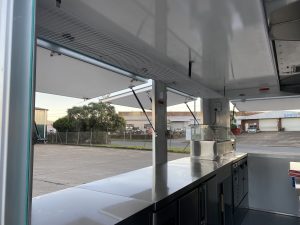
Your menu is often the biggest factor in determining the right trailer size.
For example:
Coffee or dessert menus
Usually fit comfortably in an 8ft trailer
Street food menus
Often require a 10ft trailer for grills, fryers, and prep space
Full hot food kitchens
May require a 12ft trailer or larger
Thinking about your equipment needs early will help you avoid overcrowding your workspace.
Larger trailers usually require:
More equipment
Larger power systems
Additional refrigeration
This naturally increases the total startup cost.
If you’re comparing different options, you can view our Food Trailer Price List to get an idea of pricing across different trailer sizes.
Understanding pricing early helps you plan your investment and choose a trailer that fits your business goals.
Another factor people overlook is where the trailer will operate.
Smaller trailers can:
Fit into tighter market spaces
Be easier to tow
Access residential streets for catering jobs
Larger trailers are better suited for:
large festivals
high-capacity events
long-term event setups
Many operators start with a smaller trailer and upgrade once their business grows.
The best food trailer size depends on:
your menu
your team size
your trading locations
your budget
For many new operators, a 10ft trailer offers the best balance between space, flexibility, and cost.
However, every business is different, and choosing the right setup from the beginning can make a big difference to your daily workflow.
Starting a food trailer business involves many decisions, and choosing the right trailer size is one of the most important.
A well-sized trailer allows you to:
work comfortably
serve customers efficiently
scale your business over time
If you’re researching mobile food businesses, you might also find it helpful to read How Much Do Food Truck Owners Really Make? The Viral Video That Has Everyone Talking, which looks at the income potential in this industry.
For more information, full pricing and package options, register here‘
or contact us here
One of the biggest concerns people have when starting a food trailer business is council approval.

Questions like:
Do I need council approval for a food trailer?
What licences are required?
How hard is it to get approved?
The good news is that thousands of mobile food businesses operate across Australia every year. The key is understanding what councils require and starting with a compliant trailer.
In this guide, we’ll break down the essentials so you know exactly what to expect.
Yes. In Australia, food trailers are classified as mobile food businesses, which means they must be registered with a local council under state food safety regulations.
While requirements vary slightly by state, most operators must:
Register their food business with a council
Follow the Food Standards Code
Pass a health inspection
Have a Food Safety Supervisor certificate
Meet hygiene and food handling requirements
Approval is usually straightforward when your trailer meets the correct design standards.
If you’re still in the research phase, our The Complete Guide to Buying a Food Trailer in Australia (What Most People Miss) explains the key things to look for before purchasing a trailer.
Most councils will check that your trailer meets basic food safety and hygiene standards.
Typical requirements include:
A dedicated hand wash sink with hot and cold running water.
Surfaces must be smooth, easy to clean, and food-safe (usually stainless steel).
Food must be stored at safe temperatures using commercial-grade refrigeration.
Trailers usually need separate fresh water and wastewater tanks.
All gas and electrical systems must meet Australian safety standards.
These requirements are why proper trailer design matters when starting a mobile food business.
For a full breakdown of startup expenses, see our guide on How Much Does It Cost to Start a Food Trailer Business in Australia?
View our range of food trailers
One of the most common mistakes new operators make is buying a trailer that isn’t designed for compliance.
This can lead to:
Delays in council approval
Extra modification costs
Failed inspections
Lost trading opportunities
A well-designed trailer will already account for:
Correct plumbing layout
Proper ventilation
Food-safe materials
Efficient equipment placement
Starting with the right setup makes the approval process much smoother.
View our range of food trailers
Approval timelines vary depending on your location and council workload.
In many cases, the process involves:
Submitting a mobile food business application
Providing trailer design or equipment details
Scheduling a health inspection
Receiving approval to trade
For many operators, this process can take 1–4 weeks once everything is in place.
Planning ahead is important, especially if you want to start trading at markets, events, or catering bookings.
Our article on Why Food Trailers Are Ideal for Events, Catering & Markets explains how many operators build their business around these opportunities.
Getting approved doesn’t need to be complicated. These tips can help streamline the process.
Buying from an experienced manufacturer helps avoid costly design mistakes.
While most regulations are similar across Australia, councils can have small differences.
Have records for equipment, gas compliance, and electrical systems available if requested.
Your menu influences what equipment and approvals you may need.
While council approval may sound intimidating at first, it’s simply part of operating a safe and professional food business.
Once approved, your trailer can operate at:
markets
festivals
events
private catering
community functions
And with the right setup, it can become a flexible and profitable business.
If you’re still exploring whether a mobile food business suits your situation, our article Is a Food Trailer a Smart Move for Couples or Families? looks at how many people start food trailers as a lifestyle business.
Starting a food trailer business involves a few regulatory steps, but with the right preparation, council approval is usually straightforward.
Understanding the requirements early helps you:
avoid delays
stay compliant
get trading sooner
And most importantly, it allows you to focus on building a successful food business.
If you’re researching the industry, you may also want to read How Much Do Food Truck Owners Really Make? The Viral Video That Has Everyone Talking, which looks at the income potential of mobile food businesses.
View our range of food trailers
A recent viral video from content creator Asa Andersen (@Circy64) has taken social media by storm. Filmed at the busy Subi Night Market in Perth, the video goes behind the scenes with food truck operators to reveal the real earning potential of mobile food businesses. The results have surprised thousands.
In the clip, Andersen speaks with several vendors and uncovers some impressive revenue figures:
Drizzled Co reportedly turns over around $250,000 per year while operating only two days per week.
Wyld Nectar, an American-style lemonade stall, reports monthly revenue between $20,000 and $30,000.
Mr Goz Gozleme operates four locations with more than $1 million in annual turnover.
Taco Daddy claims around $100,000 per month, which equals approximately $1.2 million annually.
You can view the full video referenced in the news article to hear directly from the owners sharing their numbers and business insights.
View this post on Instagram
These figures highlight an important point. Food trailers and food trucks are not just side projects or weekend hobbies. They can be serious, scalable businesses.
Here’s why mobile food businesses continue to attract driven Australians looking to increase their income and work for themselves.
Opening a traditional restaurant often requires a very large upfront investment, long-term leases, and high overhead. In comparison, a fully equipped food trailer or truck can be launched at a fraction of the cost.
With the right setup, you can start generating revenue faster and with lower financial risk.
Industry reports regularly show food trucks generating between $250,000 and $500,000 or more in annual turnover. High-performing operators, particularly those with multiple locations or strong event schedules, can exceed seven figures.
The key difference is mobility. You can take your business directly to your customers instead of waiting for them to come to you.
For more information, full pricing, and package options, register here
One of the biggest advantages of owning a food trailer is flexibility. Operators can target:
Night markets and festivals
Corporate catering and private functions
Sporting events and community gatherings
Regular weekly trading locations
This flexibility allows owners to adjust their schedule, chase high-demand events, and maximise revenue during peak seasons.
It is important to remember that the figures shared in the viral video represent gross turnover, not net profit. Running a food trailer includes costs such as:
Council permits and licences
Ingredients and packaging
Staffing
Maintenance and servicing
Event site fees
Marketing and branding
However, because overheads are typically lower than in a traditional restaurant, well-managed food trailer businesses can achieve strong profit margins.
Have any more questions about our food trailers?
For Australians aged 30 to 60 looking to take control of their income, food trailers offer:
A lower barrier to entry
Scalable income potential
Lifestyle flexibility
The opportunity to build a recognisable brand
The viral video confirms what many experienced operators already know. With the right concept, location, and work ethic, a food trailer can generate significant revenue.
If you have been considering entering the food industry, mobile catering provides a practical and profitable pathway.
Ready to turn your idea into income? Explore Food Trailer King’s range of quality food trailers and custom builds designed to help you start strong and grow with confidence.
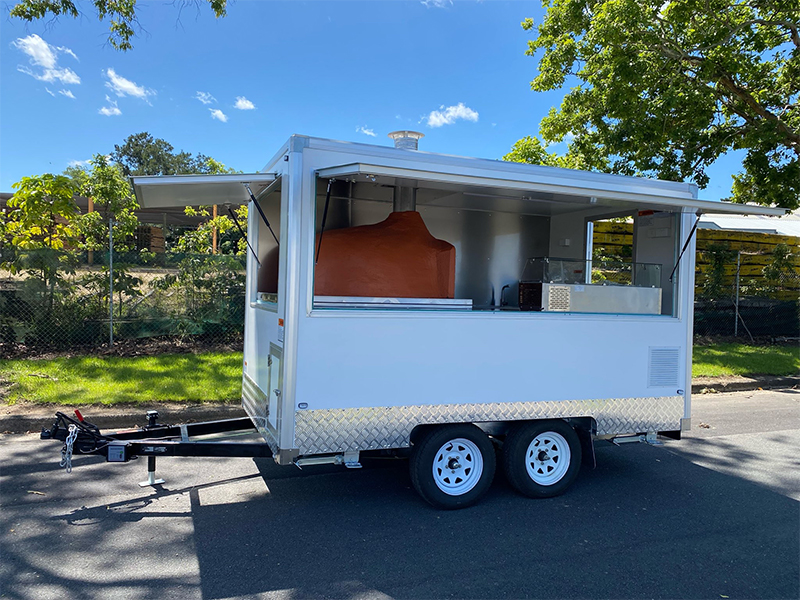
Starting a food business is a big decision, especially when it affects more than just you.
If you’re a couple thinking about building something together, or a family looking for more control over income and lifestyle, you might be wondering:
Is a food trailer actually a smart move for us?
For many Australians, the answer is yes, and here’s why.
One of the biggest advantages of a food trailer is that it naturally suits two operators.
In a typical setup:
One person handles cooking
The other manages service, orders, and payments
Both share setup, pack-down, and event planning
This makes it ideal for:
Couples wanting to build something jointly
Parents looking for flexible income
Family members combining skills
Instead of working separate jobs with separate stress, you’re building something you both own.
View our range of food trailers

Opening a café can mean:
$150k – $300k+ upfront
Long leases
High fixed overheads
Staffing pressure
A food trailer, on the other hand, offers:
Lower startup costs
No long-term commercial lease
Fewer staff required
The ability to scale gradually
For couples or families, this lower risk often feels far more manageable, especially if one person keeps part-time work while the business grows.
How much does it cost to start a food trailer business?
Flexibility is one of the biggest lifestyle benefits.
With a food trailer, you can:
Trade weekends only
Focus on events and catering
Work around school schedules
Scale up during busy seasons
Slow down when needed
You’re not locked into 7-day trading unless you choose to be.
That flexibility is incredibly valuable for families balancing commitments.
There’s something powerful about building a business together.
Many couples say they value:
Working toward common goals
Sharing wins and milestones
Creating something tangible
Having control over their financial future
A food trailer isn’t just income; it’s an asset you own.
What’s included in an FTK food trailer
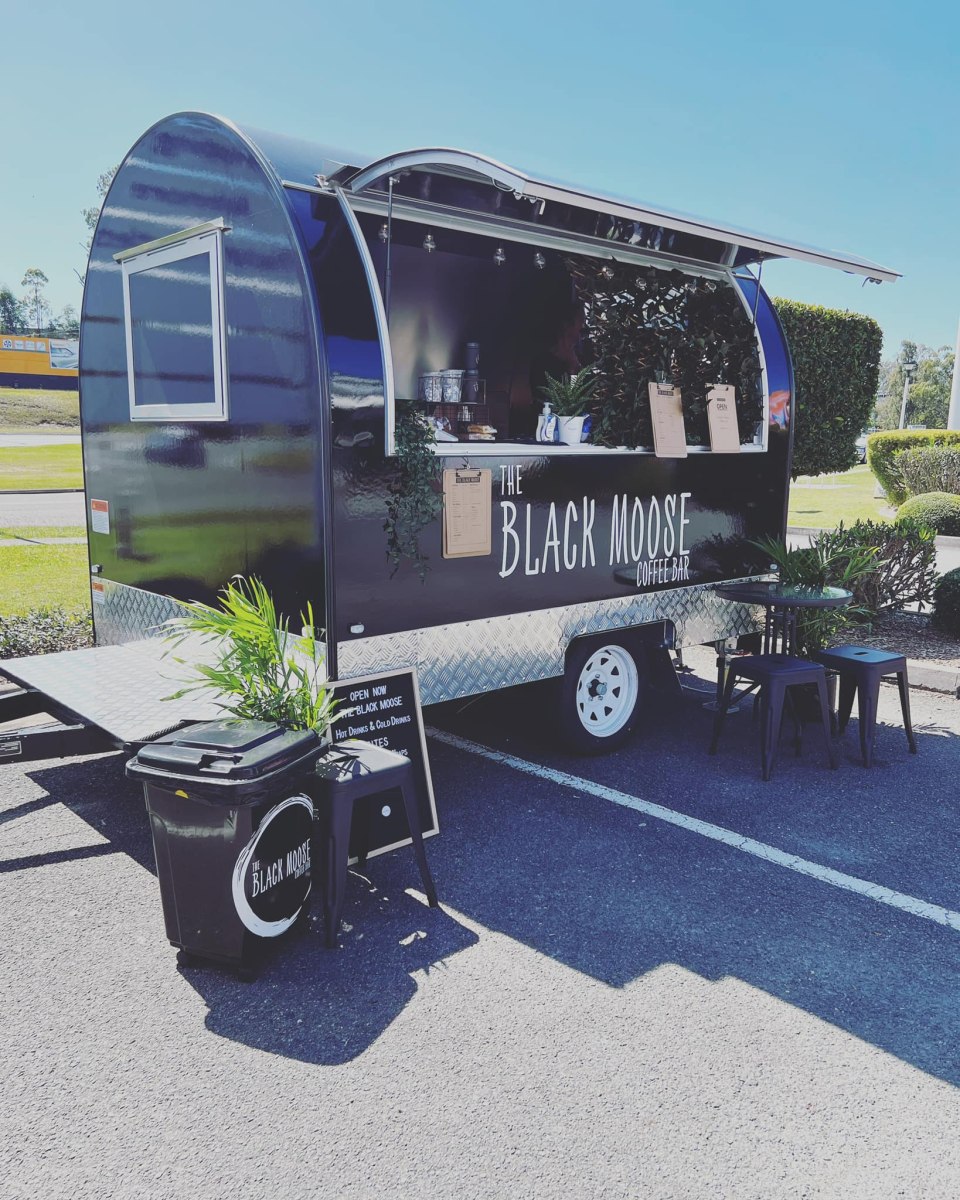
One of the smartest ways couples reduce risk is by starting small.
For example:
Begin with weekend markets
Add catering bookings
Expand into larger events
Upgrade trailer size later
A food trailer can grow with you. You don’t need to “go all in” on day one.
Food trailer sizes and layouts
Many successful operators:
Start with a trailer
Build a loyal following
Test their concept
Eventually expand into a café or multiple trailers
For families, this step-by-step approach feels safer than jumping straight into a full brick-and-mortar setup.
You keep your options open.
A food trailer isn’t perfect for everyone.
It does require:
Physical work
Early starts for events
Weather considerations
Strong teamwork
If communication is solid and expectations are clear, it can be incredibly rewarding.
If not, it can create pressure.
The key is going in with the right mindset and the right setup.
A food trailer can be a smart move for couples or families if you want:
More control over income
Lower startup risk
Flexibility around family life
The ability to grow at your own pace
An asset you actually own
For many Australians aged 30 – 60, it’s not about “getting rich quick.”
It’s about:
Stability
Independence
Building something together
And that’s where food trailers make sense.
If you’re exploring the idea as a couple or family, the best place to start is a simple conversation.
No pressure. Just clarity on what’s possible.
If you’re thinking about starting a food trailer business, one of the first (and smartest) questions you’ll ask is:
“How much does it actually cost?”
The short answer?
Less than opening a café or restaurant, and with far more flexibility.
The longer answer depends on your trailer, your menu, and how you plan to operate. Below, we break down the real-world costs so you can plan with confidence and avoid surprises.
For more information, full pricing and package options, register here
In Australia, most people start a food trailer business for $35,000 to $80,000+, depending on setup and goals.
That usually includes:
The food trailer itself
Fit-out and equipment
Compliance and approvals
Initial operating costs
Let’s walk through each part so you can see where the money actually goes — and where you can make smart choices.

Your trailer is the foundation of the business, and costs vary based on:
Size (e.g. 8ft, 10ft, 12ft+)
Standard vs custom build
Equipment requirements
Power and gas setup
Finish level
Typical range: $25,000 – $60,000+
A well-built, compliant trailer isn’t just an expense — it’s an income-producing asset that:
Holds its value
Is easier to insure and finance
Helps you pass council and event inspections
Your menu drives your equipment needs. A coffee trailer will look very different to a burger or pizza setup.
Costs here depend on:
Cooking equipment (grills, fryers, ovens, coffee machines)
Refrigeration
Benches, sinks, and storage
Electrical and gas compliance
Typical range: $5,000 – $20,000+
The key is buying what you need now, not overloading the trailer on day one.
This is the part many first-time buyers underestimate — but it’s critical.
You may need to budget for:
Council approvals
Food safety certifications
Inspections
Plumbing and gas sign-offs
Typical range: $1,000 – $5,000
Starting with a trailer that’s designed for compliance can save months of delays and costly rework.
How our food trailer delivery works
To trade professionally, you’ll also need:
Trailer signage or wrap
Menu boards
Smallwares (utensils, containers, cleaning gear)
EFTPOS setup
Typical range: $1,500 – $5,000
This is where your trailer starts looking like a real business, not a side project.
Before your first event or market, you’ll want to allow for:
Public liability insurance
Food business registration
Initial stock and ingredients
Fuel, gas, and power
Typical range: $1,500 – $4,000
Here’s a simple guide:
Lean, entry-level setup: ~$35k–$45k
Well-equipped, professional setup: ~$50k–$65k
Larger or custom builds: $70k+
Compared to a café or restaurant (often $150k–$300k+), a food trailer offers:
Lower startup risk
Faster time to trade
More control over costs
Yes — many buyers choose finance to:
Preserve cash flow
Get trading sooner
Spread costs over time
Finance can make a higher-quality trailer more accessible without draining your savings.
The cheapest setup isn’t always the smartest.
A quality trailer can:
Reduce downtime
Avoid compliance headaches
Make it easier to book events and catering
Hold resale value if plans change
That’s why many operators focus on value and longevity, not just the upfront number.
If you’re looking for:
A lower-risk entry into food business
Flexibility around where and when you trade
A setup that can grow with you
Then a food trailer is often one of the most cost-effective ways to get started.
For more information, full pricing and package options, register here
If you’re looking for a food business that’s flexible, lower risk, and built to go where the demand is, food trailers tick a lot of boxes — especially for events, catering, and markets.
From weekend markets to private functions and large-scale events, food trailers give you the freedom to work smarter, not harder. Here’s why so many operators choose a food trailer-first approach, and how it can benefit you as a business owner.
One of the biggest advantages of a food trailer is mobility.
Instead of relying on foot traffic at one fixed location, you can:
Trade at busy weekend markets
Book high-volume events and festivals
Cater private functions, weddings, and corporate events
Follow seasonal demand throughout the year
This flexibility means more opportunities to earn, without committing to long leases or permanent rent.
Browse our range of food trailers
Events and markets are ideal because they often deliver:
Large crowds
Short, intense trading windows
Strong impulse purchases
With the right setup and menu, it’s possible to do the equivalent of several quiet weekdays in one event.
A well-designed food trailer helps you:
Serve faster
Handle peak demand
Maximise output in a limited time
That’s where layout, equipment placement, and workflow really matter.
For more information, full pricing and package options, register here
Catering is one of the most underrated benefits of owning a food trailer.
With a compliant, professional setup, your trailer can be booked for:
Weddings
Corporate events
Sporting clubs
Private parties
Council and community events
Unlike markets, catering is often pre-booked and prepaid, which means:
Predictable income
Less reliance on the weather
Better cash flow planning
Many owners use catering as their stable income base, then add markets and events on top.

Compared to cafés or restaurants, food trailers typically come with:
Lower startup costs
No long-term leases
Reduced staffing requirements
Fewer fixed expenses
This is especially valuable for event and market traders, where flexibility is key. If an event doesn’t suit your business, you’re not locked in — you simply book different ones.
Events, councils, and organisers expect a professional, compliant setup.
A properly built food trailer helps you:
Meet food safety and council requirements
Pass event inspections more easily
Look credible to organisers and clients
Avoid last-minute compliance issues
This can make the difference between being accepted for premium events or missing out altogether.
Food trailers work just as well whether you want:
A weekend income stream
A side business alongside another job
A full-time operation with events, markets, and catering
You can scale up or down depending on your lifestyle, energy, and goals — something traditional hospitality rarely allows.
For more information, full pricing and package options, register here
Many successful operators use food trailers to:
Test a concept before opening a shop
Build a following at events and markets
Grow brand awareness without huge risk
Reinvest profits into a second trailer or upgrade
If your goals change, your trailer can adapt with you — or be sold on, giving you options instead of obligations.
If you’re looking for a food business that offers:
Flexibility
Lower risk
Strong earning potential
Control over your time and locations
Then a food trailer designed for events, catering, and markets could be the smartest move you make.
Get a catalogue for a food trailer now
For more information, full pricing and package options, register here
If you’re researching food trailers for sale in Australia, you’re probably asking the same questions everyone does:
How much does a food trailer really cost?
What size do I need?
Can I tow it with my car?
What approvals are required?
Buying a food trailer is a big step — but done right, it can be one of the smartest ways to start or grow a food business without the overheads of a café or restaurant.
If you’re at the early research stage, start by browsing our full range of
food trailers for sale in Australia to see what layouts and sizes are available.
For more information, full pricing and package options, register here

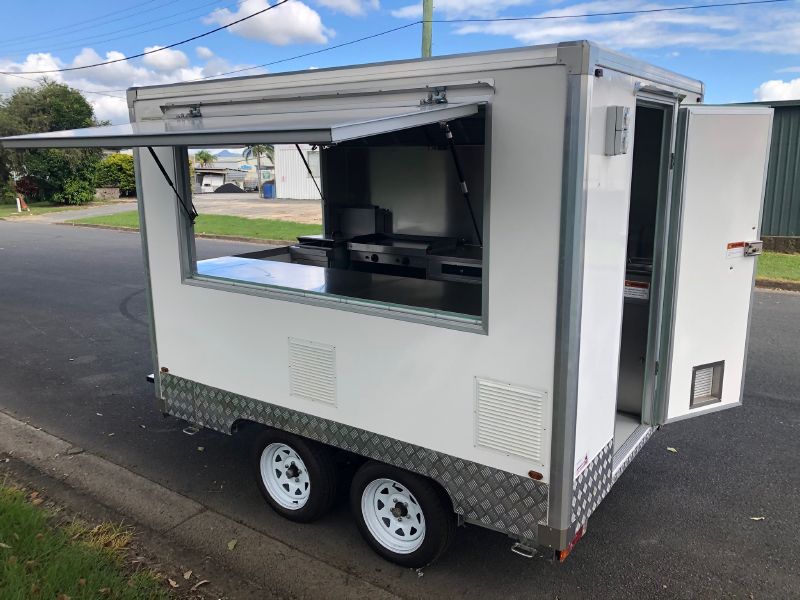
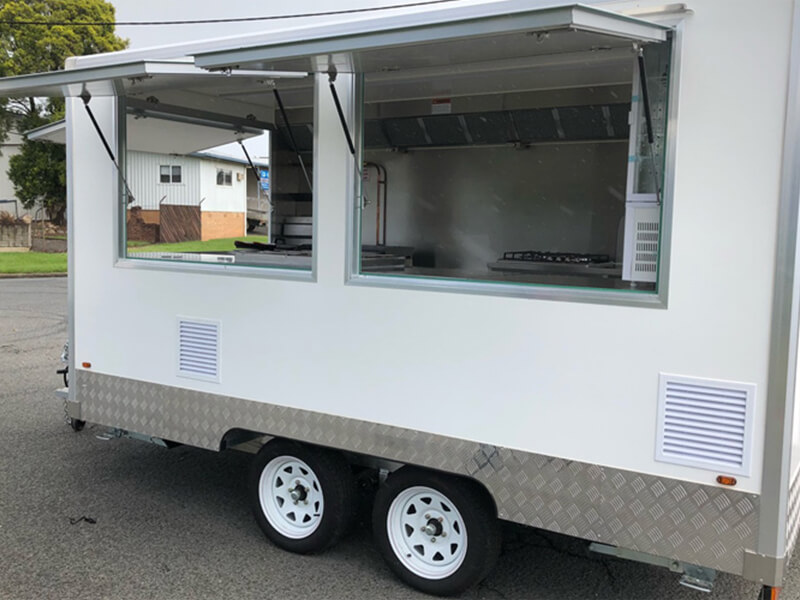
Food trailers have become a popular choice for Australian operators because they offer:
Lower startup costs than cafés or restaurants
Faster setup times
Flexibility to trade at markets, events, and private functions
The ability to scale without relocating
Many Food Trailer King customers begin with a single trailer and later upgrade or add another as demand grows.
If you’re comparing formats, our guide to
food trailers vs food trucks is a helpful place to start.
One of the most common mistakes buyers make is choosing a trailer that’s either too small to work efficiently or larger than necessary.
1.8–2.4 m food trailers – Best for coffee, desserts, or compact menus
3.0–3.6 m food trailers – Ideal for most hot food businesses
4.2 m+ food trailers – Suited to high-volume service or multiple staff
You can explore different layouts and dimensions in our
custom food trailer range.
Two food trailers can look similar online but be very different in build quality and compliance.
A well-built food trailer should include:
Fully welded chassis
Commercial-grade stainless steel benches
Proper ventilation and canopy allowance
Easy-clean internal finishes
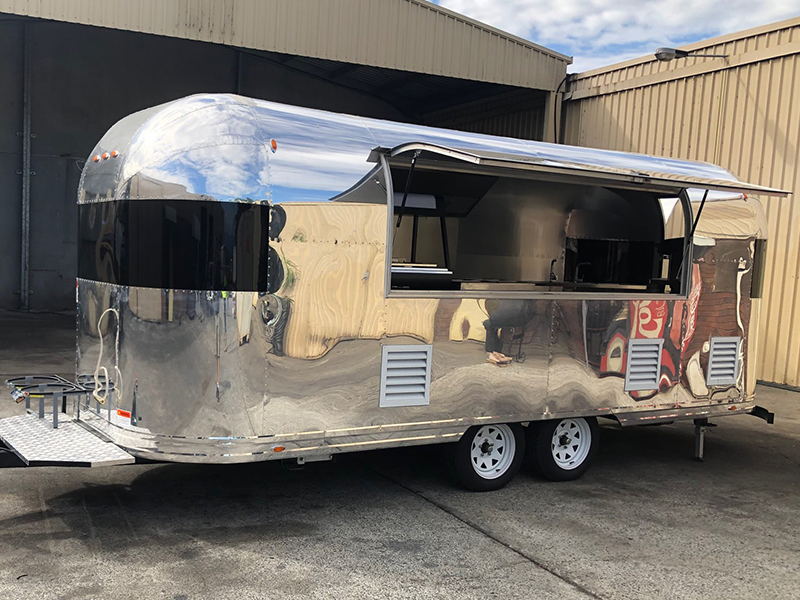
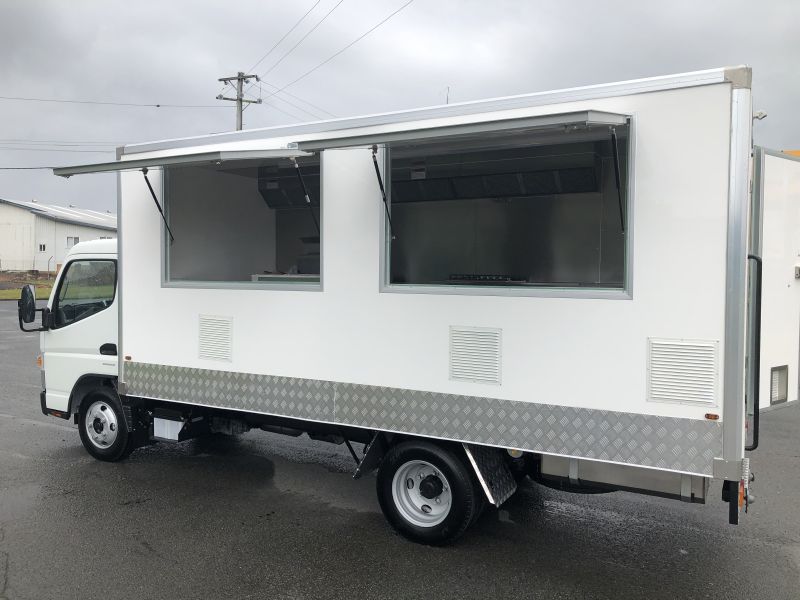
At Food Trailer King, trailers are designed for real Australian trading conditions — not just visual appeal.
You can see examples of layouts and inclusions on our
food trailer specifications page.
When searching “how much does a food trailer cost?”, many buyers only consider the trailer price.
You should also budget for:
Cooking equipment
Council approvals and inspections
Registration and insurance
Branding and signage
For a realistic breakdown, our
food trailer pricing guide explains what impacts cost and where people often underestimate.
Food trailer requirements vary by council and state, but preparation makes approvals far easier.
Before purchasing, consider:
Where you plan to trade
What food you’ll prepare
Power, water, and waste requirements
Our overview of
food trailer council approvals in Australia explains what most councils look for and how to prepare.
Your food trailer should support growth, not restrict it.
Ask yourself:
Will this layout handle higher volume?
Can equipment be added later?
Will it suit my menu in 1–2 years?
Many operators later upgrade to a larger or more specialised build — something worth considering from day one.
For more information, full pricing and package options, register here
Can I tow a food trailer with my car?
This depends on trailer size and your vehicle’s towing capacity. Smaller trailers are compatible with most utes and SUVs.
Is a food trailer better than a food truck?
For many first-time operators, yes. Food trailers are typically more affordable, lighter, and easier to maintain.
You can read more in our
food trailer FAQs.
A food trailer isn’t just equipment — it’s your business.
Choosing the right trailer can lead to:
Faster service
Fewer compliance issues
Easier daily operation
Stronger long-term returns
If you’re ready to take the next step, explore the full Food Trailer King range or speak with our team about a trailer that suits your goals.
View all Food Trailer King trailers for sale
For more information, full pricing and package options, register here
For further information about our range of products and prices, please enter your details in the form below to get access to instant pricing and the opportunity to have the information package posted out to you
For further information about our range of products and prices, please enter your details in the form below to get access to instant pricing and the opportunity to have the information package posted out to you